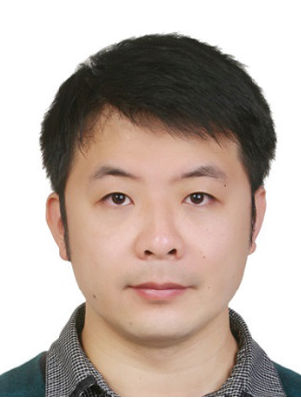
ResumeXi is a professor and a doctorial supervisor of School of Nanjing University. Xi Chen received his bachelor (2004) and his Ph.D. (2010) in Biochemistry and Molecular Biology, both from Nanjing University. Professor Xi Chen made the important finding of extracellular microRNA during his PhD program. The finding was published on Cell Research in 2008, and has been cited for more than 1800 times so far. As the first author of the article, Prof Chen and his colleagues reported for the first time the existence of extracellular microRNA, and he has been dedicated in the theory and application research of extracellular microRNA ever after. From 2010 to 2014, Xi Chen worked as an associate professor in School of Life Sciences, Nanjing University and as a professor since June 2014. Research FieldsBiological function and translational application of non-coding RNAs A. Investigating the mechanism and function of miRNA My lab is mainly interested in how miRNAs are regulated in mammalians. My lab employed a mainly genetic approach, using animal model such as mice and rat and cell biological techniques to conduct most of the experiments. miRNAs are a class of single-stranded noncoding RNAs of approximately 22 nucleotides in length that play an important role in post-transcriptional gene regulation. In our lab, we found that miRNAs can be transmitted from one species to another, inducing signal interference in distant species, even in a cross-kingdom manner. This new mode of cross-species communication might mediate symbiotic and pathogenic relationships between various organisms. In our lab, we have shown that animals absorb plant miRNAs from plant foods, thereby a_ ecting their own gene expression. B. Below is a brief list of my research directions The function of Extracellular miRNAs and the application of miRNA in medicine and biotechnology. 1. Serum miRNA as a biomarker in application of the early diagnosis of the disease. 2. The formation mechanism and biological function of extracellular miRNAs. 3. New therapies for diseases with the Microvesicle delivered miRNAs. 4. New mechanism of RNA–mediated intergenerational inheritance.
Part-time Academic JobWork ExpericeAchievement1. Chen X, Ba Y, Ma L, Cai X, Yin Y, Wang K, Guo J, Zhang Y, Chen J, Guo X, Li Q, Li X, Wang W, Zhang Y, Wang J, Jiang X, Xiang Y, Xu C, Zheng P, Zhang J, Li R, Zhang H, Shang X, Gong T, Ning G, Wang J*, Zen K*, Zhang J*, Zhang CY*. Characterization of microRNAs in serum: a novel class of biomarkers for diagnosis of cancer and other diseases. Cell Res. 2008 Oct; 18(10): 997-1006. 2. Chen X, Gao C, Li H, Huang L, Sun Q, Dong Y, Tian C, Gao S, Dong H, Guan D, Hu X, Zhao S, Li L, Zhu L, Yan Q, Zhang J*, Zen K*, Zhang CY*. Identification and characterization of microRNAs in raw milk during different periods of lactation, commercial fluid, and powdered milk products. Cell Res. 2010 Oct; 20(10): 1128-37. 3. Liu Y, Liu R, Yang F, Cheng R, Chen X, Cui S, Gu Y, Sun W, You C, Liu Z, Sun F, Wang Y, Fu Z, Ye C, Zhang C*, Li J*, Chen X*. miR-19a promotes colorectal cancer proliferation and migration by targeting TIA1. Mol Cancer. 2017 Mar 4; 16(1): 53. 4. Liu Y, Chen X, Cheng R, Yang F, Yu M, Wang C, Cui S, Hong Y, Liang H, Liu M, Zhao C, Ding M, Sun W, Liu Z, Sun F, Zhang C, Zhou Z*, Jiang X*, Chen X*. The Jun/miR-22/HuR regulatory axis contributes to tumourigenesis in colorectal cancer. Mol Cancer. 2018 Jan 19; 17(1): 11. 5. Wang Y, Chen ZP, Hu H, Lei J, Zhou Z, Yao B, Chen L, Liang G, Zhan S, Zhu X, Jin F, Ma R, Zhang J, Liang H, Xing M, Chen XR, Zhang CY*, Zhu JN*, Chen X*. Sperm microRNAs confer depression susceptibility to o‑ spring. Sci Adv. 2021 Feb 10; 7(7): eabd7605. 6. Fu Z, Zhang X, Zhou X, Ur-Rehman U, Yu M, Liang H, Guo H, Guo X, Kong Y, Su Y, Ye Y, Hu X, Cheng W, Wu J, Wang Y, Gu Y, Lu SF, Wu D, Zen K, Li J*, Yan C*, Zhang CY*, Chen X*. In vivo self-assembled small RNAs as a new generation of RNAi therapeutics. Cell Res. 2021 Jun; 31(6): 631-648. 7. Zhang L, Wu T, Shan Y, Li G, Ni X, Chen X, Hu X, Lin L, Li Y, Guan Y, Gao J, Chen D, Zhang Y, Pei Z*, Chen X*. Therapeutic reversal of Huntington's disease by in vivo self-assembled siRNAs. Brain. 2021 Dec 16; 144(11): 3421-3435. 8. Liang G, Zhu X, Zhang Z, Chen L, Feng H, Zhan S, Hu H, Yu R, Zhang CY, Feng Z*, Yao B*, Wang Y*, Chen X*. microRNAs in aged sperm confer psychiatric symptoms to o‑ spring through causing the dysfunction of estradiol signaling in early embryos. Cell Discov. 2022 Jul 5; 8(1): 63. 9. Zhou X, Yu M, Ma L, Fu J, Guo J, Lei J, Fu Z, Fu Y, Zhang Q*, Zhang CY*, Chen X*. In vivo self-assembled siRNA as a modality for combination therapy of ulcerative colitis. Nat Commun. 2022 Sep 28; 13(1): 5700. 10. Hu H, Cheng R, Wang Y, Wang X, Wu J, Kong Y, Zhan S, Zhou Z, Zhu H, Yu R, Liang G, Wang Q, Zhu X, Zhang CY, Yin R*, Yan C*, Chen X*. Oncogenic KRAS signaling drives evasion of innate immune surveillance in lung adenocarcinoma by activating CD47. J Clin Invest. 2022 Nov 22: e153470. Awards |

