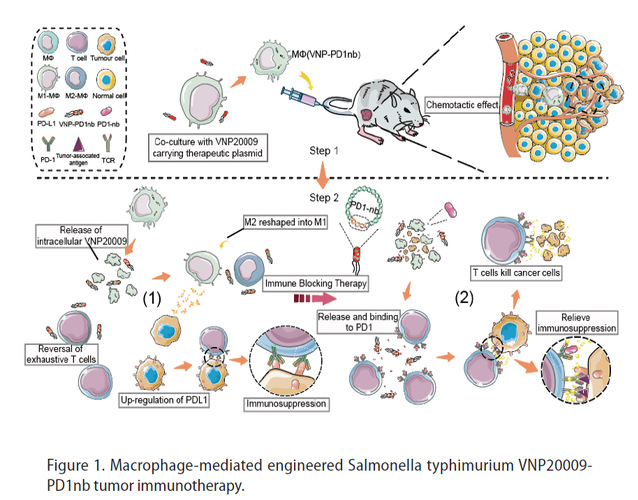
ResumeZichun Hua is the Director of Pharmaceutical Biotechnology Research Institute of Jiangsu Industrial Technology Research Institute, the Changjiang Scholarship Professorship and winner of National Outstanding Youth Funds. Hua received his Ph.D. in Biochemistry from Nanjing University (1994). His postdoctoral research at Wardsworth Research Center, New York (1994-1996) and a visiting professor at the University of Berkeley in California (2000-2003). He has won the second prize of National Technological Innovation Award, the second prize of National Natural Science Award, and the ‑ rst prize of the Science and Technology Award of Ministry of Education twice. Research FieldsProtein Function and Biopharmaceuticals Innovation Our group research focused on three aspects: 1) therapeutic target identification, functional mechanism, drug development; 2) the nonapoptotic functions and target validation of canoncial death proteins; 3) genetic improvement of hypoxia-specific Salmonella and development of tumortargeting gene therapy system. (a) Macrophage-mediated tumor-targeted delivery of engineered Salmonella typhimurium VNP20009 in anti-PD1 therapy against melanoma Bacterial antitumor therapy has great application potential given its unique characteristics. We show that macrophage-mediated tumor-targeted delivery of Salmonella VNP20009 can effectively reduce the toxicity caused by administrating VNP20009 alone. This benefits from tumor-induced chemotaxis for macrophages combined with their slow release of loaded strains. Inspired by changes in the tumor microenvironment, macrophages were loaded with the engineered strain VNP-PD1nb, which can express and secrete anti-PD1 nanoantibodies after they are released from macrophages. This novel triple-combined immunotherapy significantly inhibited melanoma tumors by reactivating the tumor microenvironment by increasing immune cell infiltration, inhibiting tumor cell proliferation, remodeling TAMs to an M1-like phenotype and prominently activating CD8 T cells. These data suggest that novel combination immunotherapy is expected to be a breakthrough relative to single immunotherapy [1]. (b) RIP3 deficiency attenuated hepatic stellate cell activation and liver ‑ brosis in schistosomiasis through JNK-cJUN/Egr1 downregulation Activated hepatic stellate cells synthesizing a large amount of extracellular matrix are the key events to hepatic fibrosis. We found that RIP3 was highly expressed in liver tissues of mice infected with S. japonicum. Our study demonstrated that RIP3 deficiency attenuated liver fibrosis induced by S. japonicum. RIP3–JNK–cJUN/ Egr1 axis positive feedback regulated inflammatory factor and ROS production, promoting schistosomiasis liver fibrosis. Inhibiting JNK prevented schistosomiasis liver fibrosis. Thus RIP3 and its signal pathway could be novel drug targets for pathogenic liver fibrosis.
Part-time Academic JobWork ExpericeAchievement1. Leyang Wu, Lin Li, Shufeng Li, Lina Liu, Wenjie Xin, Chenyang Li, Xingpeng Yin, Xuebo Xu, Feifei Bao, Zichun Hua*. Macrophage-mediated tumor-targeted delivery of engineered Salmonella typhimurium VNP20009 in anti–PD1 therapy against melanoma. Acta Pharmaceutica Sinica B 2022; 11 (10): 3165-3177. 2. Li-Jun Song, Xu-Ren Yin, Sheng-Wen Guan, Hong Gao, Pan-Pan Dong, Cong-Jin Mei, Ying-Ying Yang, Ying Zhang, Chuan-Xin Yu, Zi-Chun Hua*. RIP3 deficiency attenuated hepatic stellate cell activation and liver brosis in schistosomiasis through JNK-cJUN/Egr1 downregulation. Signal Transduction and Targeted Therapy 2022; 7: 193. 3. Leyang Wu, Feng Chen, Xiaoyao Chang, Lin Li, Xingpeng Yin, Can Li, Fangxu Wang, Chenyang Li, Qin Xu, Hongqin Zhuang,* Ning Gu,* Zi-Chun Hua*. Combined Cellular Thermometry Reveals That Salmonella typhimurium Warms Macrophages by Inducing a Pyroptosis-like Phenotype. Journal of the American Chemical Society 2022; 144(42): 19396-19409. 4. Leyang Wu, Feifei Bao, Lin Li, Xingpeng Yin, Zichun Hua*. Bacterially mediated drug delivery and therapeutics: Strategies and advancements. Advanced Drug Delivery Reviews August 2022; 187: 114363. 5. Wenzhao Zhou, Yueyang Lai, Jianhui Zhu, Xuebo Xu, Wenliang Yu, Zengzheng Du, Leyang Wu, Xuerui Zhang, Zichun Hua*. The Classical Apoptotic Adaptor FADD Regulates Glycolytic Capacity in Acute Lymphoblastic Leukemia. International Journal of Biological Sciences 2022; 18(8): 3137-3155. 6. Feifei Bao, Mengjie Liu, Wenhua Gai, Yuwei Hua, Jing Li, Chao Han, Ziyu Zai, Jiahuang Li, Zichun Hua*. Bacteria-mediated tumor-targeted delivery of tumstatin (54-132) signi cantly suppresses tumor growth in mouse model by inhibiting angiogenesis and promoting apoptosis. Frontier of Medicine 2022; https://doi.org/10.1007/s11684-022- 0925-2. 7. Xing Liu, Lulu Zhou, Wenjie Xin, Zichun Hua*. Exogenous Annexin 1 inhibits Th17 cell di‑ erentiation induced by anti-TNF treatment via activating FPR2 in DSS-induced colitis. International Immunopharmacology 2022; 107: 108685. 8. Xuerui Zhang, Banghui Zhu, Lin Li, Jiahong Xu, Yuheng Han, Jing Zhang*, Zichun Hua*. The dephosphorylation of FADD at S191 induces an excessive expansion of TCRαβ+ IELs in the intestinal mucosa. Immunology 2022; 167(2): 233-246. 9. Xu, HR , Li, P; Wang, XY; Zhuang, HQ*; Hua, ZC*. Emerging roles of hnRNP A2B1 in cancer and inflammation. International Journal of Biological Macromolecules 2022; 221: 1077- 1092.Awards |